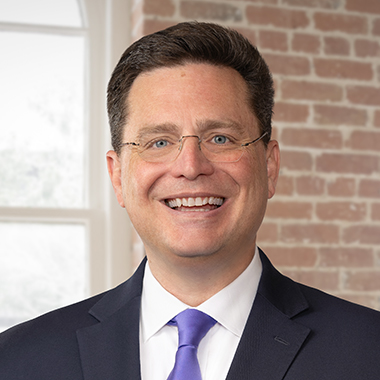
Portrait of John Jerry Glas

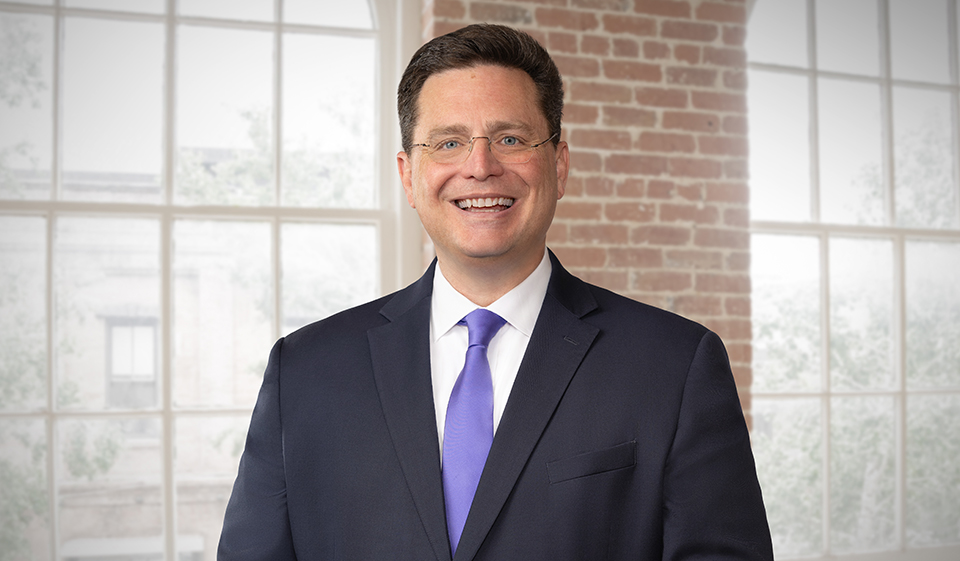
John Jerry Glas

Partner

Portrait of John Jerry Glas
  • Overview
  • Insights
  • Experience
  • Events
  • News

John Jerry Glas is the Chair of the Civil Litigation Department at Deutsch Kerrigan. Jerry is a Fellow of the American College of Trial Lawyers. He has tried 117 civil or criminal trials, including 79 jury trials. Jerry has been admitted pro hac vice in 10 states and had success on both sides of the aisle. In 2021, as lead trial counsel for the plaintiff (Lindale Pipeline, LLC), Jerry obtained a $26 million verdict in Houston. In 2012, as lead trial counsel for the defendant (TASER International, Inc.), Jerry obtained a zero verdict in St. Louis, which was listed by Missouri Lawyers Weekly as one of that year’s “Largest Defense Verdicts.”

Jerry is the author of The New Science of Trial Advocacy: The Waiter Pivot, which was published by the American Bar Association (ABA Publishing) in 2023. The “Waiter Pivot” is an alternative approach to trial advocacy that embraces the recent paradigm shift in jury psychology and teaches attorneys how to surprise, disarm, and persuade modern jurors. Forget direct advocacy, conventional cross-examination, and bobblehead experts. Jerry encourages trial lawyers to rewrite the old trial playbook, reinvent themselves, and redefine their role in the courtroom.

Jerry's innovative approach to trial advocacy was highlighted on the cover of Louisiana Super Lawyers® in 2022, in a featured article titled "How Jerry Glas Develops His Rapport with Juries." And, in 2024, Jerry was inducted into the CityBusiness Leadership in Law Hall of Fame. He is a frequent presenter, having lectured locally and nationally on trial strategy, jury selection, cross-examination, expert witnesses, life care plans, and traumatic brain injury (TBI) cases.

Jerry enjoys the challenge of being retained as “rescue counsel,” which requires him to parachute into cases months or weeks before trial. And he is often retained by national insurance companies to perform one of his “TBI triages” and assist local counsel with evaluating and defending against TBI claims.

Jerry has served on the Trial Advocacy Committee for Louisiana State University Paul M. Hebert Law Center since 2020 and on the teaching faculty for the Trial Advocacy 3-Day Boot Camp since 2018. As an adjunct professor, Jerry previously enjoyed teaching a full-credit Trial Practice class at Loyola University New Orleans College of Law (2009 to 2014).   

Jerry considers Deutsch Kerrigan a “teaching hospital.” He firmly believes in the importance of mentoring and training lawyers. Jerry considers it a privilege to try cases with young lawyers, and he looks for opportunities to “get them their first witness.” The Civil Litigation Department includes many lawyers who have tried cases with (or against) Jerry. It reflects Jerry’s personal philosophy that every law firm needs a core group of scrappers, who enjoy trying cases together. Because iron sharpens iron.    

Jerry was born and raised in New Orleans. Before attending law school, he earned an M.A. in philosophy and taught religion at his alma mater, Jesuit High School. Before joining the firm in 1999, Jerry served as a Senior Assistant District Attorney for the Parish of Orleans. He has been married for more than 25 years and has two wonderful daughters and a spoiled Schnauzer.

    • Louisiana State University (J.D., 1996)
    • University of Toronto (1992)
      • Philosophy
    • College of the Holy Cross (B.A., 1991)
      • Philosophy
    • Louisiana State University (J.D., 1996)
    • University of Toronto (1992)
      • Philosophy
    • College of the Holy Cross (B.A., 1991)
      • Philosophy
    • The Supreme Court of the United States, 2018
    • U.S. District Court for the Eastern District of Louisiana, 1998
    • U.S. Court of Appeals for the Fifth Circuit, 1998
    • U.S. District Court for the Western District of Louisiana, 2000
    • Louisiana Supreme Court, 1996
    • The Supreme Court of the United States, 2018
    • U.S. District Court for the Eastern District of Louisiana, 1998
    • U.S. Court of Appeals for the Fifth Circuit, 1998
    • U.S. District Court for the Western District of Louisiana, 2000
    • Louisiana Supreme Court, 1996
    • American College of Trial Lawyers
      • Fellow, 2020-present
    • The Trial Network (TRIAL.COM)
      • Chair, 2018
      • Executive Committee, 2016-2019
      • Member, 2006-Present
    • Louisiana Association of Defense Counsel
      • Board Member, District 4, 2024-Present
    • American College of Trial Lawyers
      • Fellow, 2020-present
    • The Trial Network (TRIAL.COM)
      • Chair, 2018
      • Executive Committee, 2016-2019
      • Member, 2006-Present
    • Louisiana Association of Defense Counsel
      • Board Member, District 4, 2024-Present
    • Benchmark Litigation "Litigation Star"
      • 2025-2026
    • Louisiana Super Lawyers®
      • 2015-present
    • Louisiana Super Lawyers® - Cover & Featured Article
    • CityBusiness Leadership in Law Award
      • 2012, 2017, 2024 (Hall of Fame)
    • The Best Lawyers in America® “Lawyer of the Year”
      • Mass Tort Litigation / Class Actions - Defendants, 2023 & 2026
    • The Best Lawyers in America® 
      • 2012-present
    • Inside New Orleans Readers’ Favorite Elite Lawyer
      • 2021
    • New Orleans Magazine’s "Top Lawyers" 
      • 2016, 2018-2019, 2021-2025
    • CityBusiness “Ones to Watch: Law”
      • 2016
    • Missouri Lawyers Weekly - Largest Defense Verdicts
      • 2013
    • AV Preeminent Martindale-Hubbell® Peer Review Rating™
      • 2010-Present.
    • Louisiana State Bar Association Pro Bono Publico Award
      • 2009
    • Federal Bar Association Camille Gravel Public Service Award
      • 2009
    • Benchmark Litigation "Litigation Star"
      • 2025-2026
    • Louisiana Super Lawyers®
      • 2015-present
    • Louisiana Super Lawyers® - Cover & Featured Article
    • CityBusiness Leadership in Law Award
      • 2012, 2017, 2024 (Hall of Fame)
    • The Best Lawyers in America® “Lawyer of the Year”
      • Mass Tort Litigation / Class Actions - Defendants, 2023 & 2026
    • The Best Lawyers in America® 
      • 2012-present
    • Inside New Orleans Readers’ Favorite Elite Lawyer
      • 2021
    • New Orleans Magazine’s "Top Lawyers" 
      • 2016, 2018-2019, 2021-2025
    • CityBusiness “Ones to Watch: Law”
      • 2016
    • Missouri Lawyers Weekly - Largest Defense Verdicts
      • 2013
    • AV Preeminent Martindale-Hubbell® Peer Review Rating™
      • 2010-Present.
    • Louisiana State Bar Association Pro Bono Publico Award
      • 2009
    • Federal Bar Association Camille Gravel Public Service Award
      • 2009
    • Mwalimu Center for Justice Capital Post-Conviction Project of Louisiana
      • Board Chair
    • Louisiana State University Paul M. Hebert Law Center
      • Trial Advocacy Committee
    • Mwalimu Center for Justice Capital Post-Conviction Project of Louisiana
      • Board Chair
    • Louisiana State University Paul M. Hebert Law Center
      • Trial Advocacy Committee

Firm Highlights

  • Experience

    Burnell Joseph v. Atalco Gramercy, LLC et al., No. 3:23-cv-505, United States District Court for the Middle District of Louisiana

    Bob Kerrigan and Jose Ruiz successfully secured summary judgment dismissal for their client, Velan, Inc., in a complex intentional tort and products liability act involving catastrophic injury. The plaintiff, a precipitation batch tank operator working at the Atalco alumina refinery in Gramercy, Louisiana, suffered severe and debilitating chemical burn injuries to his face, eyes, and body when he was sprayed with caustic liquor while working underneath a tank at the refinery. He claimed that the valve that controlled the flow of liquor into the tank was leaking, which allowed the tank to become filled with liquor after it had been previously verified as empty. He filed suit against Velan, Inc., the manufacturer of the valve that controlled the flow of liquor into the tank, alleging that the valve was unreasonable dangerous in accordance with the Louisiana Products Liability Act. He also filed an intentional tort claim against his employer, Atalco Gramercy, LLC, alleging that Atalco knew the valve was leaking and continued to force employees to work underneath the tank. He claimed that under these conditions, an incident such as his was substantially certain to occur. Following the close of discovery, Velan moved for summary judgment dismissal of the plaintiff’s claims was appropriate because: (1) the plaintiff’s injuries were a result of Atalco’s misuse of the valve; (2) the plaintiff lacked the expert testimony needed to prove his theory of liability under the Louisiana Product’s Liability Act; (3) the Velan valve at issue was not unreasonably dangerous as defined by the Louisiana Products Liability Act; and (4) the plaintiff was unable to prove proximate causation needed to establish his case of liability against Velan. The Hon. Brian Jackson found that under the undisputed facts presented by Velan, summary judgment was appropriate and dismissed the plaintiff’s claims against it, with prejudice.
  • Insight

    No Mercy for Employers in Louisiana Supreme Court’s Recent Magill Decision

    In its recent per curiam opinion, Magill v. Werner Enterprises, Inc. of Nebraska[1], the Louisiana Supreme Court has foreclosed a routine defense strategy to shield employers from direct negligence claims. The high court has extended their 2022 decision in Martin v. Thomas[2], and now allows plaintiffs to pursue direct negligence claims against an employer despite the employer’s stipulation that its employee was in the course-and-scope of employment and caused the accident. Essentially, employers who fail to implement better employment practices will permit plaintiffs to ramp up potential exposure with evidence, if such exists, that heretofore they were routinely barred from introducing at trial. The Supreme Court’s Magill holding should encourage employers to update where needed their policies and procedures pertaining to hiring, training, supervising, and entrusting duties and property to employees, not only for the safety of their employees and customers in this state, but also eliminate employer’s exposure to direct negligence claims. Prior to Martin, a litigation strategy had taken shape where employers stipulated to 1) an employee being in course-and-scope of employment at the time of the accident, 2) that the employee was at fault for the accident being caused, or 3) both. By stipulating these facts, employers were largely able to exclude evidence of any direct negligence on part of the employer and/or narrow the scope of trial to only a contest of the plaintiff’s injuries. The Supreme Court in Martin held that despite an employer admitting their employee was in course and scope when the accident occurred, plaintiffs could pursue direct negligence claims against the employer—as the issue of liability had not been admitted. Accordingly, employers found success by admitting both course and scope and liability—as seen in the Western District of Louisiana’s holding in Ferguson v. Swift Transp. Co. of Arizona[3]. In Ferguson, the defendants stipulated that their employee was acting in course-and-scope at the time of the accident and their employee was 100% at fault for the accident being caused. Due to the employer’s stipulation of fault, Judge Wicks of the Western District of Louisiana held that Martin did not apply and that plaintiffs could not pursue direct negligence claims. In Magill, the Louisiana Supreme Court provided scarce reasoning for their decision. The high court simply affirmed the District Court’s expansion of the holding in Martin and that the employer’s reliance on the Western District’s Ferguson holding was a misapplication of Louisiana law. The Supreme Court also cited the decision in Tardo v. Farrell.[4] where the Fifth Circuit held that even if an employer and employee stipulate to course and scope and fault, those admissions do not eliminate direct-negligence claims because those claims remain separate issues for the trier of fact. The Fifth Circuit notably stated, “the societal decisions as to who actually pays does not change the manner of assessing fault to all parties as required by law.” This statement raises concern, as plaintiffs may now attempt to challenge employer stipulations that historically narrowed trials. The Supreme Court did not explain its reliance on Tardo, so future litigation will likely clarify the decision’s full impact. Under Magill, plaintiffs are permitted to pursue direct negligence claims against the employer despite the employer admitting that their employee was acting in course and scope at the time of the accident and their employee was 100% at fault for the accident being caused. The full effect of the Supreme Court’s decision remains to be seen. In praxis, Magill will permit plaintiffs to put on evidence of direct negligence by an employer in front of a jury who cannot assign fault—as fault has already been stipulated to by the defendants. Employers now face the practical risk that plaintiffs will encourage juries to increase damages as a form of punishment against an employer that admits fault but contests the nature and extent of the plaintiff’s injuries. Employers should use this moment to rigorously review and strengthen policies and procedures related to hiring and training in order to limit exposure when plaintiffs assert direct-negligence claims.  [1] Magill v. Werner Enterprises, Inc. of Nebraska, 2025-00892 (La. 11/12/25) [2] Martin v. Thomas, 21-01490 (La. 6/29/22), 346 So.3d 238 [3] Ferguson v. Swift Transp. Co. of Arizona, 17-1570, 2023 WL 173413 (W.D. La. Jan. 12, 2023) [4] Tardo v. Ferrell, 25-123 (La. App. 5 Cir. 5/28/25), 2025 WL 1516837 (unpublished).