News

Firm Announcement /

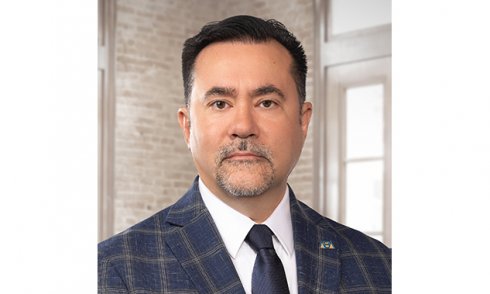
Keith Bergeron to serve as Chair-Elect of the ABA Forum on Construction Law

August 9, 2023

share this page

Keith Bergeron to serve as Chair-Elect of the ABA Forum on Construction Law

Deutsch Kerrigan, LLP congratulates Keith J. Bergeron, who will become Chair-Elect of the American Bar Association’s Forum on Construction Law beginning in August 2023.  He will assume the role of Chair in 2024.

Keith is a long-time member and leader within the Forum and most recently chaired the Technology Committee after serving on the Governing Committee.  Keith follows a long line of Deutsch Kerrigan attorneys who have also served in leadership roles within the Forum, including becoming the firm’s second Chair-Elect after Ralph L. Kaskell, Jr., (deceased) served in 1983-84.

As Chair-Elect, Keith recalls his service as the Forum’s second Chair of its Young Lawyers group and seeks to engage the Forum’s membership, particularly its young and diverse attorneys, by developing opportunities to connect, network, and foster lasting business and personal relationships with mentors in the industry.  Through his many Forum mentors, particularly Charles E. Seemann, Jr., Keith understands the importance of the Forum’s storied role and legacy of building the best construction lawyers.  Keith looks forward to guiding the development of publications and programs that will grow the skills necessary for construction attorneys to thrive professionally irrespective of their specialization or jurisdiction of licensure.

At Deutsch Kerrigan, Keith is a partner in the Construction Law Department who concentrates his practice on solving disputes representing design professionals.  He is married to his high school sweetheart, Tracy, and is blessed with two adult children, Nicholas and Savannah.

ABOUT THE AMERICAN BAR ASSOCIATION’S FORUM ON CONSTRUCTION LAW
The American Bar Association’s Forum on Construction Law is the leading source of high-quality education and reference materials on the topics of most concern to busy construction lawyers. Founded in 1976, the Forum on Construction Law’s primary focus is the furtherance of the education and professional development of construction lawyers. Members of the Forum represent all segments of the construction industry: owners, design professionals, general contractors, construction managers, subcontractors, suppliers, insurers, and sureties. The Forum’s mission is to serve the construction industry through education and leadership while Building the Best Construction Lawyers.


Firm Highlights

  • Experience

    Burnell Joseph v. Atalco Gramercy, LLC et al., No. 3:23-cv-505, United States District Court for the Middle District of Louisiana

    Bob Kerrigan and Jose Ruiz successfully secured summary judgment dismissal for their client, Velan, Inc., in a complex intentional tort and products liability act involving catastrophic injury. The plaintiff, a precipitation batch tank operator working at the Atalco alumina refinery in Gramercy, Louisiana, suffered severe and debilitating chemical burn injuries to his face, eyes, and body when he was sprayed with caustic liquor while working underneath a tank at the refinery. He claimed that the valve that controlled the flow of liquor into the tank was leaking, which allowed the tank to become filled with liquor after it had been previously verified as empty. He filed suit against Velan, Inc., the manufacturer of the valve that controlled the flow of liquor into the tank, alleging that the valve was unreasonable dangerous in accordance with the Louisiana Products Liability Act. He also filed an intentional tort claim against his employer, Atalco Gramercy, LLC, alleging that Atalco knew the valve was leaking and continued to force employees to work underneath the tank. He claimed that under these conditions, an incident such as his was substantially certain to occur. Following the close of discovery, Velan moved for summary judgment dismissal of the plaintiff’s claims was appropriate because: (1) the plaintiff’s injuries were a result of Atalco’s misuse of the valve; (2) the plaintiff lacked the expert testimony needed to prove his theory of liability under the Louisiana Product’s Liability Act; (3) the Velan valve at issue was not unreasonably dangerous as defined by the Louisiana Products Liability Act; and (4) the plaintiff was unable to prove proximate causation needed to establish his case of liability against Velan. The Hon. Brian Jackson found that under the undisputed facts presented by Velan, summary judgment was appropriate and dismissed the plaintiff’s claims against it, with prejudice.
  • Insight

    No Mercy for Employers in Louisiana Supreme Court’s Recent Magill Decision

    In its recent per curiam opinion, Magill v. Werner Enterprises, Inc. of Nebraska[1], the Louisiana Supreme Court has foreclosed a routine defense strategy to shield employers from direct negligence claims. The high court has extended their 2022 decision in Martin v. Thomas[2], and now allows plaintiffs to pursue direct negligence claims against an employer despite the employer’s stipulation that its employee was in the course-and-scope of employment and caused the accident. Essentially, employers who fail to implement better employment practices will permit plaintiffs to ramp up potential exposure with evidence, if such exists, that heretofore they were routinely barred from introducing at trial. The Supreme Court’s Magill holding should encourage employers to update where needed their policies and procedures pertaining to hiring, training, supervising, and entrusting duties and property to employees, not only for the safety of their employees and customers in this state, but also eliminate employer’s exposure to direct negligence claims. Prior to Martin, a litigation strategy had taken shape where employers stipulated to 1) an employee being in course-and-scope of employment at the time of the accident, 2) that the employee was at fault for the accident being caused, or 3) both. By stipulating these facts, employers were largely able to exclude evidence of any direct negligence on part of the employer and/or narrow the scope of trial to only a contest of the plaintiff’s injuries. The Supreme Court in Martin held that despite an employer admitting their employee was in course and scope when the accident occurred, plaintiffs could pursue direct negligence claims against the employer—as the issue of liability had not been admitted. Accordingly, employers found success by admitting both course and scope and liability—as seen in the Western District of Louisiana’s holding in Ferguson v. Swift Transp. Co. of Arizona[3]. In Ferguson, the defendants stipulated that their employee was acting in course-and-scope at the time of the accident and their employee was 100% at fault for the accident being caused. Due to the employer’s stipulation of fault, Judge Wicks of the Western District of Louisiana held that Martin did not apply and that plaintiffs could not pursue direct negligence claims. In Magill, the Louisiana Supreme Court provided scarce reasoning for their decision. The high court simply affirmed the District Court’s expansion of the holding in Martin and that the employer’s reliance on the Western District’s Ferguson holding was a misapplication of Louisiana law. The Supreme Court also cited the decision in Tardo v. Farrell.[4] where the Fifth Circuit held that even if an employer and employee stipulate to course and scope and fault, those admissions do not eliminate direct-negligence claims because those claims remain separate issues for the trier of fact. The Fifth Circuit notably stated, “the societal decisions as to who actually pays does not change the manner of assessing fault to all parties as required by law.” This statement raises concern, as plaintiffs may now attempt to challenge employer stipulations that historically narrowed trials. The Supreme Court did not explain its reliance on Tardo, so future litigation will likely clarify the decision’s full impact. Under Magill, plaintiffs are permitted to pursue direct negligence claims against the employer despite the employer admitting that their employee was acting in course and scope at the time of the accident and their employee was 100% at fault for the accident being caused. The full effect of the Supreme Court’s decision remains to be seen. In praxis, Magill will permit plaintiffs to put on evidence of direct negligence by an employer in front of a jury who cannot assign fault—as fault has already been stipulated to by the defendants. Employers now face the practical risk that plaintiffs will encourage juries to increase damages as a form of punishment against an employer that admits fault but contests the nature and extent of the plaintiff’s injuries. Employers should use this moment to rigorously review and strengthen policies and procedures related to hiring and training in order to limit exposure when plaintiffs assert direct-negligence claims.  [1] Magill v. Werner Enterprises, Inc. of Nebraska, 2025-00892 (La. 11/12/25) [2] Martin v. Thomas, 21-01490 (La. 6/29/22), 346 So.3d 238 [3] Ferguson v. Swift Transp. Co. of Arizona, 17-1570, 2023 WL 173413 (W.D. La. Jan. 12, 2023) [4] Tardo v. Ferrell, 25-123 (La. App. 5 Cir. 5/28/25), 2025 WL 1516837 (unpublished).